Category Archives: Uncategorized

Billionaires, Bodhisattvas and Sailors

m6774_GG13-SFOJUNE-11370

Cities are said to be repositories of memories, but it is people that make cities. The exchange of ideas and life styles that give urban life texture, stories and scurrilous gossip.

At the western side of Pacific heights, near the home of Senator Diane Feinstein by the Lyon steps so popular with outdoor exercise enthusiasts, are the houses of the new, high-tech business leaders. Jonathan Ive, one of Apple’s masterminds lives on Broadway. Nearby is one of the many trophy homes of “Bazillionaire” Larry Ellison who is credited with changing the world of database software.

Ellison himself has a flamboyant lifestyle and, according to the press, a public image as a brash business tycoon that he has been trying to counter of late with the recent public display of his well chosen Japanese collection – oozing the quiet elegance he’d like to be known for. Of course the press has a different idea, announcing “Larry Ellison, Bodhisattva in Waiting, Brings Enlightenment to San Francisco’s Asian Art Museum.”

ImageThe Ellison house , at 2850 Broadway, has a grandstand position from which to oversee the America’s Cup races on the Bay below. His sleek black Oracle-sponsored catamarans, defending cup-holders , virtually flying across the water below the panoramic terrace. Ellison himself will, of course, most likely be found at the Golden Gate Yacht Club he bought or maybe even more likely, as a former crew member of the victorious 2010 boat, on the water himself.

Another commanding house, this time at 2080 Washington Street, was once the residence that sugar millionaire Adolph Spreckles built for his young bride Alma de Brettville. She was formerly a nude model for local artists and prominent as the Goddess of Victory on the Dewey Monument on Union Square. The house has fifty five rooms including a Louis XVI ballroom. It attracted a lot of gossip as Alma was half his age ,to which she would shrug her shoulders and say “I would rather be a rich man’s darling than a poor man’s slave”.
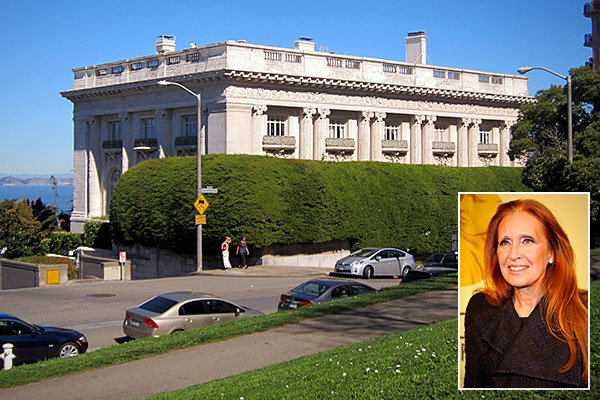
ImageMore recently the Spreckles mansion has been home to Danielle Steel, the best selling author alive. With over 100 novels to her name, her “formula” clearly captures the popular pulse, attracting sneers about her being the Queen Mother of Trash. But with books said to bring in over $800 million a year, she feels no need to comment.

At 64, the ever outspoken Steele complains that there is no style in San Francisco, “it’s all shorts and camping boots”. As for California healthy living she adds “ I would rather die than exercise . San Francisco is a great city to raise children, but I was happy to leave it”. She now seems to spend much of her time in Paris indulging in haute-couture and red-soled Louboutin shoes, of which she can boast a collection of more than 4000 pairs, worth over $4 million

These are just some of the innumerable stories that give a feel for a city and make it fascinating. As San Francisco’s self-taught thinker Kenneth Rexroth emphasised “The art of being civilized is the art of learning to read between the lies”.

1 Comment

Filed under Uncategorized

San Francisco – An Island on the Landdata:text/mce-internal,%3Cimg%20class%3D%22alignleft%20size-full%20wp-image-899%22%20src%3D%22https%3A//lonelygiraffe1.files.wordpress.com/2013/08/th.jpeg%22%20alt%3D%22th%22%20width%3D%22300%22%20height%3D%22261%22%20/%3E

th
Despite having a a population of less than a million, much smaller than nearby San Jose, San Francisco has become the richest of cities. It has the youngest population, the least children and the highest i-phone use in the country.

Surrounded by water on three sides , like Manhattan, but located on 74 hills, it is said there is an “island mentality “ to San Francisco. It was described by poet laureate Laurence Ferlinghetti as being “indeed an offshore province, not really part of mainland America”.

The City’s exudes a liberal feeling not found in many other cities in the US – years ago, the American poet Kenneth Rexroth explained that its liberal traditions reflect the fact that it was the only city that was not settled by the westward spreading puritan tradition. Instead, San Francisco has thrived as a place of great contrasts ever since the days of Levi Strauss stapling rivets into working clothes to make his, bphoto 2y now eponymous, creations.

There may be 400 banks, 20 universities and some of the most valuable property in the country, however, at the same time, it has the least home ownership and the highest rental population. Much of this due to a policy of strict rent control that is strongly enforced in San Francisco. In older properties (anything built before June of 1979), landlords may only increase the rent by a token annual percentage (1.9% in 2013-2014), so although an average 1 bedroom apartment may rent for $2,700 per month, many pay only $700 or less. It encourages tennants to stay, some for a lifetime.

I recently toured the city with my brilliant colleague, Craig Smith, city guide and authentic insider, who explained that centuries ago there were virtually no trees here when the Spanish arrived but that years of careful cultivation and a suitable Mediterranean-type climate transformed the landscape. Everything grows in this idyllic environment including many exotic shrubs and plants.

Image

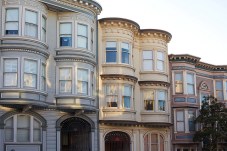
Only the eucalyptus is avoided because the dry leaves and bark are a constant fire hazard. Redwood, disliked by termites,was particularly popular in constructing the many huge Victorian and Queen Anne style houses while the windy climate meant few insects, so no need for nets or air-conditioning, making elegant bay windows a prominent architectural feature.

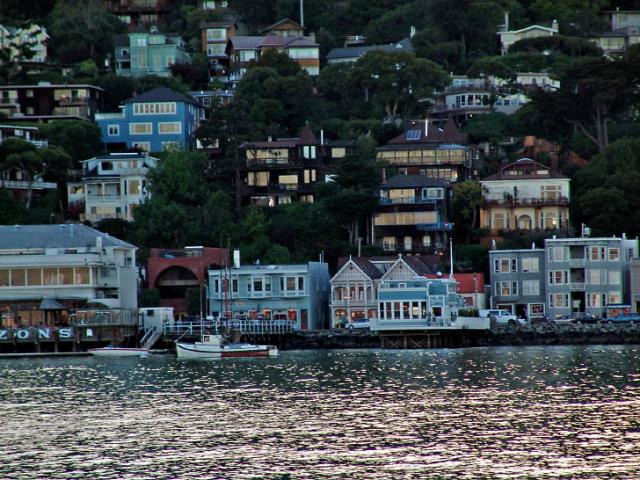
Facing the bay, the fabled Pacific Heights on the northern side of the city has some of the most valuable real estate in the United States. The major attraction for many are the world’s most beautiful urban views with a panorama from Alcatraz to Sausalito and the Golden Gate Bridge. It is also firmly anchored on bedrock, so many buildings survived both the 1906 earthquake and the fire that followed.

I asked Craig if, like so many others in San Francisco, Pacific Heights would be his location of choice assuming money to be of no object but he instantly answered  “no, Sausalito”.

g_47_WaterviewHorizonsThe former home town  of  Zen master Alan Watts and actor Robert Redford, Sausalito, has a relaxed style, warmer temperatures and proximity to both the scenic Marin headlands and wine producing NapaValley. It would certainly make a great choice!

9 Comments

Filed under Uncategorized

Gold Rush, Blue Jeans and Earthquakes

Golden-Gate-from-San-FranciscoIn my recent trip to San Francisco, I noticed that this town, having been subject to multiple booms and busts over the years, is on the move again. Headlines in the San Francisco’s  Chronicle explained that yet another technology bonanza is the culprit for the current housing boom – an effect being especially felt in the “City by the Bay” more than anywhere else.

An explosion in technology jobs, IPO’s by cutting edge start-ups and big money buy-outs by larger companies have created yet another generation of instant millionaire buyers thrown onto the city’s housing market. Even run-down old buildings and warehouses in the SOMA (South of Market Area) and away from the Bay Bridge are being renovated with a renewed vigour – becoming outposts for new social technology darlings like Twitter and Yammer.

googlecarLuxury busses with wi-fi and tinted windows zoom through the city to provide a free regular service for Google employees to Mountain View in Silicon Valley – a practice followed by numerous others like Genentech and Yahoo!, while the driverless (yes, driverless) Google car passes by to demonstrate innovation in action.

Some say this is due to a West Coast hippy mentality of the 1960’s which left a legacy of radical thinking, others because of the concentrated brain-power of Stanford, Berkeley and another 20 or so universities. Although much research has been traditionally sponsored by the military defense companies in the past, today there is a far broader spectrum of investment and speculation, with companies such as Apple, Facebook, Oracle, and other emerging tech leaders dominating from their positions in the famed Silicon Valley. The list goes on but, whatever the impulse, one third of all the venture capital in the United States is concentrated in the “magic triangle” between San Jose, Marin County and Pleasanton/Livermore in an area with a total population of around 7 million. Thanks to all this, the iconic city of San Francisco, situated in the middle of it all, is booming once again.

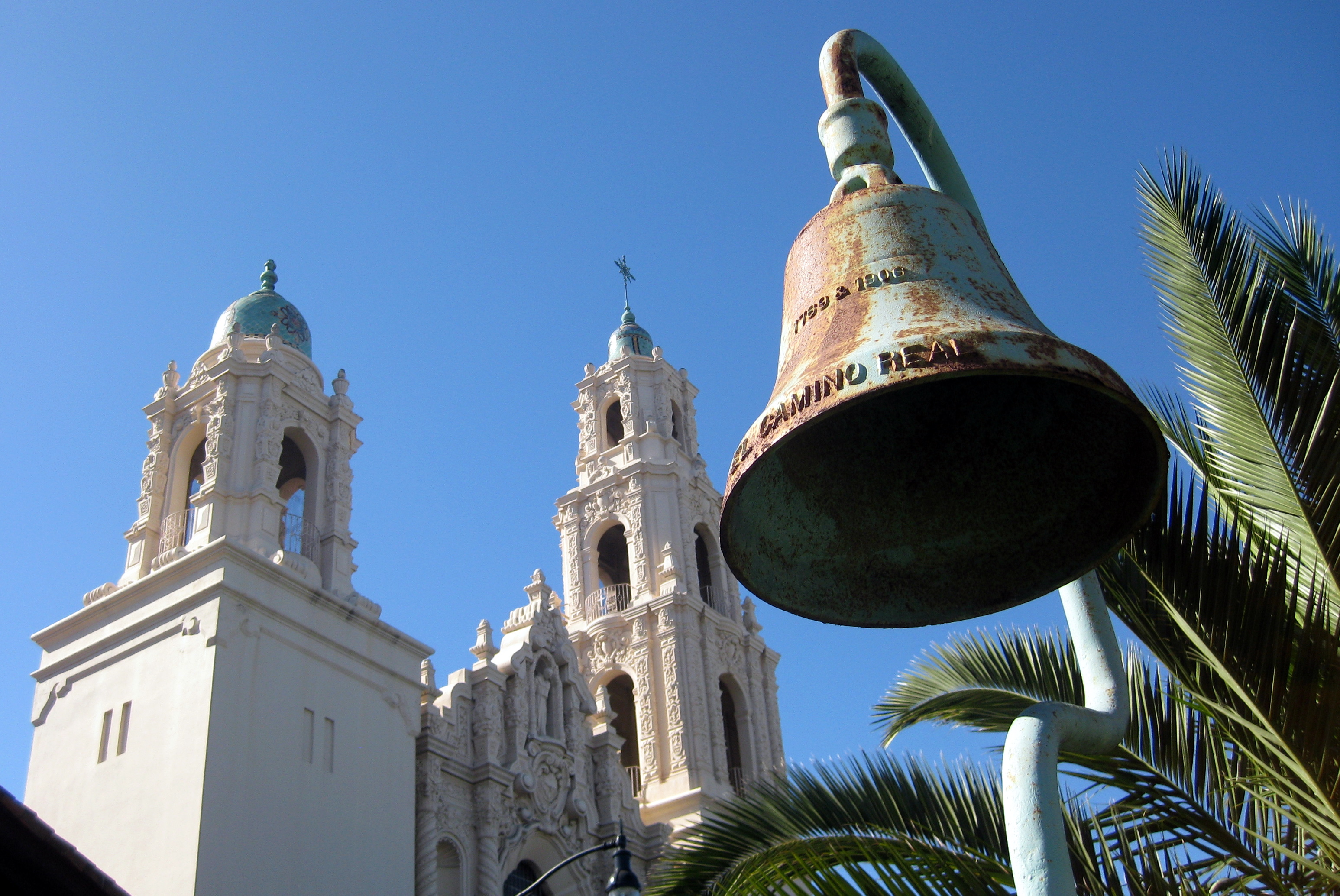
Historically of course, the Bay Area was not always so active. Protected by fog, mist and unstable weather, the Bay offered shelter but only to ships that could find it. The Camino Real of New Spain, its governors and the Dominican/Franciscan missions only reached out to claim possession. The Yerba Buena settlement which became San Francisco originally had a population of only 469 and very few trees.

The defining moments for this city were really the great Gold Rush of 1849 and the earthquake of 1906. Early discoveries of gold and the staking of claims caused a frenzy of landgrabbers and easy money.The 10,000 newcomers of 1848 became by 1849 a throng of 25,000 from all over the world. Among them only some 300 women, many of them prostitutes.

Sailors rushed inland, leaving a graveyard of 800 abandoned ships on what became known as the Barbary Coast, named after the infamous dens of North African pirates. Highwaymen averaged 500 killings a year on the Camino Real. Desperate ships captains resorted to kidnapping to raise their crews. Ex-convict elements from the Antipodies attempted a takeover which was only crushed by crowds of self appointed vigilantes. There were imprisonments, hangings and deportations back to Australia.

Interestingly, the gold seekers were only able to extract a small portion of the gold in the foothills, more 70% of the gold is estimated to still be there. However, very real fortunes were made during this time – mostly by enterprising suppliers to miners or by those involved in the construction of the rapidly growing city that was springing up as a result of this growing activity.

user2425_1172627992The classic case is the legend of Levi Strauss who originally attempted to sell brown sail cloth material for tents to gold miners but found greater demand for sturdy work clothing. The predominant material used at the time chafed so a hard wearing but smoother cotton was sent for.

This had been a major export from Nîmes in France (hence from/de Nîmes or denim) to the dockworkers and sailors of the dominant Mediterranean port of Genoa (known as Gênes to the French , hence “jeans”).On sea voyages this denim clothing could be laundered by being dragged behind the ship in a net.

For the miners however, it was not strong enough at the seams and the final commercial breakthrough came only when Jacob Davis applied copper rivets at strategic points. He became a partner and patent holder. It then became the single best selling item of clothing in the world and today is virtually a uniform in Silicon Valley. Corporate headquarters are located on Levi Strauss Plaza in San Francisco, the company is still privately owned by Levi Strauss descendants and a “blue jeans” museum has been opened in Buttenheim, Germany, from where the founder had migrated.

As much as California and the Bay Area is famous for, it also has its share of infamy – not least of which for the perceived prevalence of Earthquakes in the region. A fracture, the notorious San Andreas fault was the cause of some 400 quakes recorded after 1848. Early in the morning of April 18th 1906, however, the ground moved along the fault and suddenly shifted 16’ to 20’ north. By today’s measurements it would have registered around 8 on the Richter scale. 28,000 buildings were destroyed and half the population made homeless. However, the major damage was done not just by the force of the quake, but rather by the 50-some fires that raged for days and weeks after the quake, The prevalent rumor of course, is that a healthy percentage of those fires started, not as the result of ruptured gas lines as commonly thought, but by distraught residents who torched their own homes to claim on fire damage in the absence of any available earthquake insurance. It took 9 years to rebuild the city to a state resembling its prior glory.

6787638359_e031d7b26a_zSeismic activity is a primary concern on the famous bridges. When the Golden Gate Bridge was opened in 1937 it was thought capable of resisting any conceivable earthquake. It is still considered a technical masterpiece, but recent research suggested the possibility of a collapse at the city side, Fort Point supporting arch, leading to a 392 million strengthening retrofit.

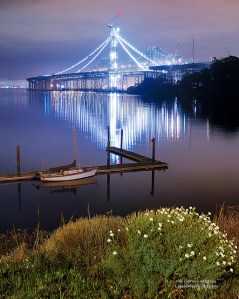
On the other side of the city, the 8.5 mile Oakland Bay Bridge is having problems too, ominously with bolts breaking. During the 1989 earthquake a 50’ section collapsed. Now a whole section between Treasure Island and Oakland is being replaced.

There is , of course,  constant research on how to minimize earthquake damage, particularly in Japan. New buildings now consist of an exoskeleton fitted with hydraulic dampers that absorb energy and convert it into heat which it dissipates. Architects in Tokyo believe indestructability is now a given. “You could keep working at your desk at Rippongi Hills if there were a big earthquake beneath Tokyo”, say specialists. 
San Francisco is taking note , thinking of “The Big One” to come.

6 Comments

Filed under Uncategorized

I HAVE FOUND THE PERFECT PLACE !

big-surBig Sur, California

The drama of the Pacific coastline is one that has always fascinated and inspired travelers.

Henry Miller, the writer whose books many readers describe as a life-changing experience, described the Pacific especially at Big Sur, as an “overwhelming force which is hidden within its obvious grandeur “. On Big Sur itself, he finally wrote “I have found the perfect place”.

North of San Francisco, the fabled Highway 1 is defeated by the rugged terrain of the “Lost Coast” and the wilderness of the King Range. South, this most romantic of roads leads to what was known as El Pais Grande del Sur (the big country to the south or Big Sur).

There, the Santa Lucia mountains seem to erupt from the ocean, giving way to incomparable vistas, unique on earth, where the one common aspect is the haunting presence of that vast majestic ocean.

Charles Olson, poet and intellectual from Gloucester, Massachussetts, declared in his study on Herman Melville (the author who wrote, amongst other classics, “Moby Dick”) – “I take SPACE to be the central fact to man born in America, from Folsom cave to now. I spell it large because it comes large here. Large and without mercy…(it is) the will to overwhelm nature that lies at the bottom of us as individuals and a people”.

The presence of the ocean reminds us of the fierce determination of the early explorers to overcome its unpredictable winds and hidden rocks. Today, speed-breaking sailors and sea-defying surfers throw an equally powerful challenge, literally flying across the water,always on the edge,pushing to the limit. Santa Cruz surfing legend Jay Moriarty (hero at 15, dead at 23) warned “Don’t take anything for granted, because one minute it can be there and the next minute it can’t, and it happens so quick.”

AR11

Fatalities occur all the time on this stretch of aquatic wilderness. Only just last week, the San Francisco Chronicle announced with a banner headline “Tragic Day on the Bay “.  One of the huge racing catamarans, whose 131’ long sail could power the boat up to three times the speed of the wind, lost its trajectory and capsized. On board, double Olympic medalist sailing champion Andrew Simpson, strategist for this year’s America’s Cup was trapped under the hull, unable to escape.

A few months earlier, in October 2012, the defending Oracle team for the Cup, lost its multi-million dollar boat when, unable to make a turn, it capsized and was destroyed by the sea.

The will to overwhelm nature may be there but ultimately the ocean is indomitable. It is awareness of this force that constantly attracts those seeking both peace and stimulation in the rugged landscape of Big Sur, where the mountains and the sky meet the turbulence of the Pacific.

400_frederic_larson_mavericks_surf_contestThe surfers consider the beaches and headlands from Ghost Tree to Pfeiffer Beach and Willow Creek to be hard core. On those waves, with many observing that ”one wrong turn, and you’re hitting the water like concrete at 50 miles an hour”. But in that challenge, one finds much more than just danger. The recent surfing film “Chasing Mavericks” explains “it’s not just about surf, it’s about the one thing in life that sets you free .”

That of course has been the big journey over the ages for “the seekers” out there. For example, the “astronauts of inner space “ as defined by the “Human Potential Movement” at the renown Esalen Institute search for a mind-body connection that comes from within instead of the waves. Esalen’s co-founder Michael Murphy, wrote a classic book exploring the mysticism of Golf and its similarities with the journey of life itself (“Golf in the Kingdom”).

Others participate in the Zen Mountain Center around Tassajara Hot Springs, while higher, at about 1300 ft above the Pacific ocean, the new Camaldoli Hermitage provides peace and refuge to all seeking tranquility. At the Hermitage, the monks follow the ancient teachings of St. Romuald, and St Benedict observing vows of silence. Outside visitors are welcome however, and may reflect on how aptly Henry Miller described this landscape, when he arrived in 1944, as “… the face of the earth as the Creator intended it to look”.

The Californian coast, has always felt on the edge of the western world, and not only because it may all fall into the sea when the “Big One” hits, but as the culmination of the “Long Road West” as talked about by American historians.

In much the same way as the tip of Portugal at Sagres served as a launching pad to the searchers of the New World under Prince Henry the Navigator, so did ”New Spain”, and the Camino Real of the Jesuits and the Franciscans, serve as the final link with the edge of that continent.

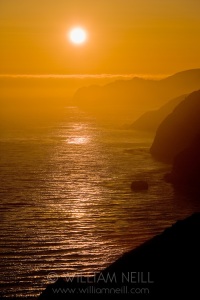
Out there at Big Sur, at this land of the setting sun, with sunsets that vanish into the sea, you realise that you have reached the true end of the world. Beyond that coastline, there is only a journey back to the beginning, to the Far East, to China, to Japan, and to the land of the rising sun.

Sunset over Pacific Ocean and coast, Big Sur, California

There is a finality to this coast, culminating with movements like California Cool, the Beat Renaissance, and even a governor who, like the present Pope Francis, studied to be a priest in a Jesuit seminary.

Governor Jerry Brown urges the principle of “tantum quantum” – where you take what you need. Less not more. “It’s almost a Buddhist thought, a Greek thought”  he says – a balance that he calls “proportionality”, where “you can never stop the human heart from yearning and you can never stop the universe from being silent “.

Big Sur, is the embodiment of all that is California thus, the drama of the past, the excitement of the present, the thought of the Beats, and a presence of the inevitable. Henry Miller was most surely right – A more Perfect Place could hardly be imagined.

2 Comments

Filed under Uncategorized

The Russians have landed at the Golden Gate!

3930696312_b8c345193f_o

A messenger came running through the corridors of the Viceroy’s residence in Mexico City. He urgently demanded to see the Spanish King’s Visitador General  – “Your  Highness, the Russians have landed at the Golden Gate!”.  These words set in motion a whole chain of actions which resulted in the naming and the myths of California.
Cabrillo, in 1542, had been the first to sail along the California coast, claiming it for Spain – but by the mid-1700’s all of Europe seemed to be attacking  the once mighty empire of Spain’s King Charles V, on which the ” sun never set ” . There was a loss of energy and spirit everywhere except in New Spain where missionary efforts were pushing the great frontier.
Politics were ever present. The Jesuits had been a kind of advance-guard  with their trademark  Black Robes , arriving ahead of the soldiers,  but back-stabbing at the courts in Madrid and Mexico City saw their universal expulsion by 1767. The Franciscans, less intellectual but more practical, took over, struggled with the politicians, and in fact had more problems with Yankee traders than the Russians.
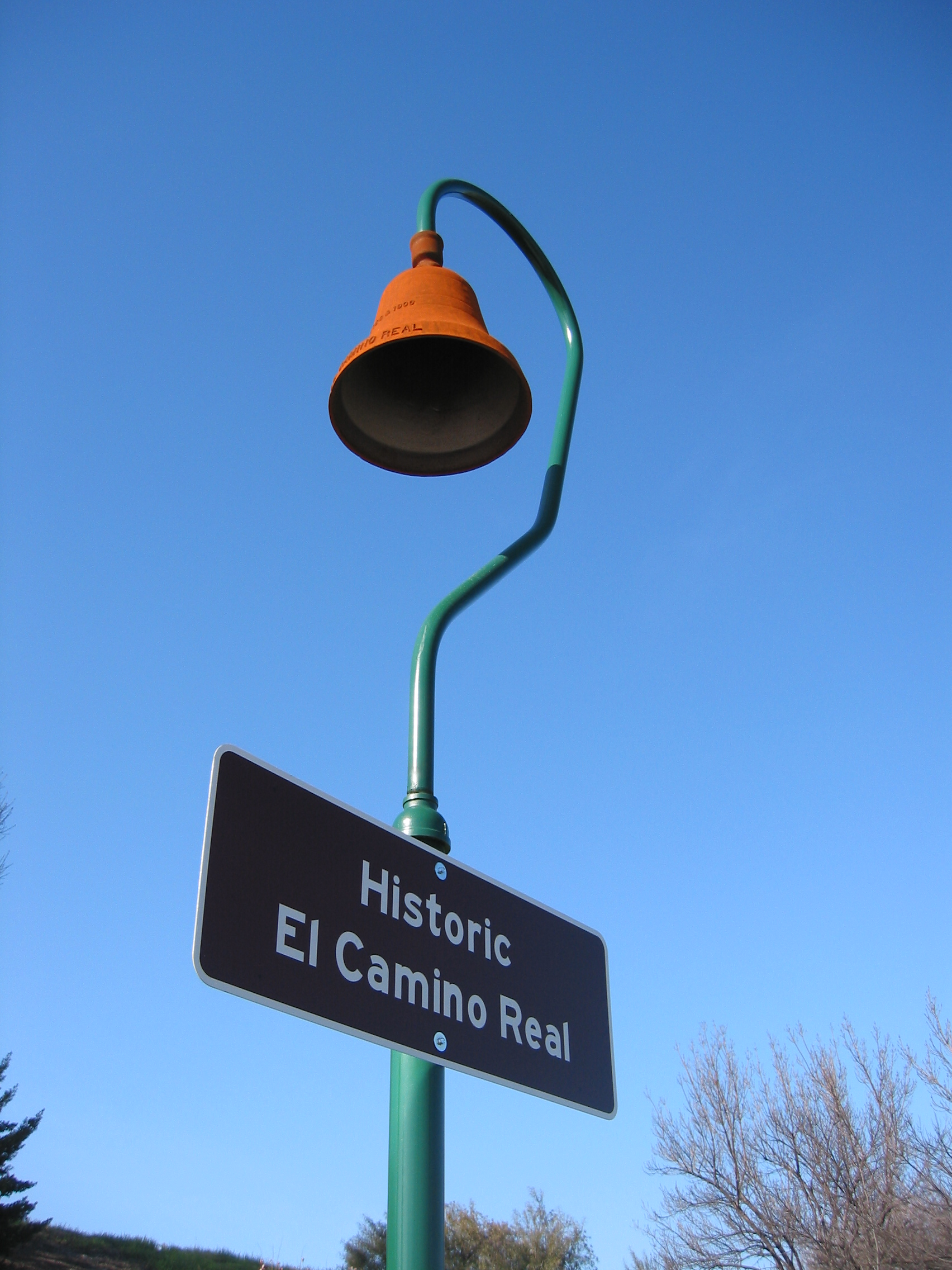
The great force of the Franciscans was a short, ascetic friar from the island of Mallorca, Junipero Serra. He had planned to establish a chain of missions, each a day’s ride apart, that would extend “El Camino Real” (The Royal Road) to the north from its then limits in Mexico and Baja California. The road itself was a mule track along the mountains, through sand and forest elsewhere, a pathfinding slow road “to eternity”, quite unlike the great roads in Europe built for military reasons by Napoleon.
By 1772 Father Serra had four small churches built between San Diego and Monterey and, in 1772, a first watch tower was built at the Golden Gate. Among the outposts established by the Franciscan friars led by Junipero were Los Angeles (1767), San Francisco (1776), Santa Clara (1777) and Santa Cruz (1791). As a result of this work, Junipero Serra had gained the unofficial title of Founder of Spanish California.
However, it is to the heart of Europe, to Italy, that we have to go to find meaning in those California place-names. Assisi, pink stone glowing from a distance, is a skyline of prominent towers, castles, domes, walls and churches. One of the great destinations in Umbria’s  “land of the saints”, it celebrates the Christian teachers of internal life – St. Benedict and St. Francis and, of course, their enthusiastic followers.
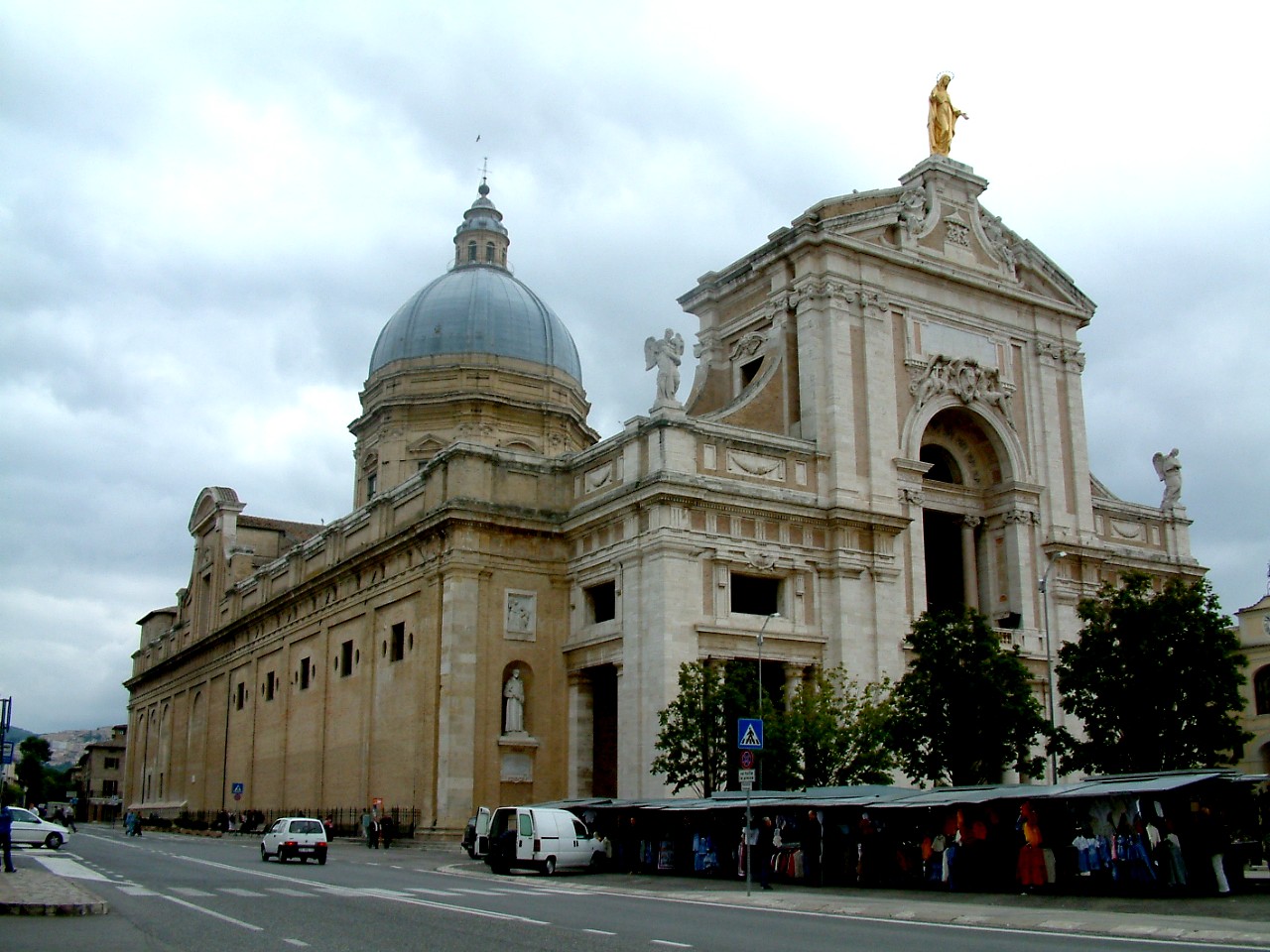
Bazylika_Santa_Maria_degli_Angeli_AsyżOutside the medieval walls, the enormous dome of the Basilica Santa Maria degli Angeli stands over the exquisite ninth century chapel, the Porziuncola.This chapel, said to have been once given to St. Benedict, was offered  to St. Francis in 1208  as a founding  home for the Franciscan order.It celebrates the Virgin Mary’s Ascent into Heaven.
Climbing the roads inside the town, narrow streets lead to the great Gothic Basilica of San Francesco d’Assisi, it’s upper and lower churches covered with frescoes by fabled artists, including Cimabue and Giotto. This makes it one of the artistic highlights of Europe, noted for its unique tranquility despite being a major stop for visitors, and of course countless pilgrims.
Porziuncola chiesa
These great Christian monuments follow the footsteps of  Francis of Assisi, a man who was transformed from playboy, soldier and singing troubadour into one of the great human spirits.  At the end of the Dark Ages, he focused attention on the humanity of Christ and  the celebration of God through his creation, philosophically returning man’s attention back to earth. It was important that the Franciscans were to be friars, free to move and travel, not monks tied to a monastery. The rope around their waist with three knots is there to remind them of their vows of poverty, chastity, and obedience. Francis himself travelled to Spain, Morocco and with the Crusaders to Egypt and the Holy Land.
It was the Spanish followers of St. Francis who created the mission on the edge of the western world. So it is interesting to note how the positioning of churches in Assisi seem to be reflected in the cities that have grown up in California.
Just like Santa Maria degli Angeli is at the base of Assisi situated outside the walls, so the mission named after it by those Spanish-speaking Franciscans, Nuestra Senora la Reina de Los Angeles de Porziuncola (Our Lady Queen of the Angels of  Porziuncola), has grown to become today’s prosaic “L.A.”, situated in the southern part of the state.
In turn the naming of San Francisco (1776, after the Basilica of San Francis), and Santa Clara (1777, after the Basilica of Santa Chiara), both in close proximity, in the northern part of the state, reflect the position of the great churches on the slopes below Mount Subasio in Assisi. While the Misión la Exaltación de la Santa Cruz (named for the feast of the Exultation of the Holy Cross) is also an echo of the great Franciscan burial church, Santa Croce in Florence. It is these fascinating links between the energetic modern cities of California, north and south, and the original Spanish Franciscan pioneers that gives an additional resonance and stimulus to the imagination.

monk13-bg3454.1L

The connections with the spiritual heart of Italy are reinforced by the recently elected Pope, the Jesuit Cardinal Bergoglio – who adopted Francis as his papal name. True to his namesake, he has embraced humility, but seems to have a twinkle in his eye. Coming from Argentina, a wonderful wine-making country, he would undoubtedly appreciate the fact that Saint Francis warned the friars not to be sad and gloomy, and the pope would surely chortle at the typical clay-souvenir mementos frequently seen in Assisi today.Amusingly one of the most common is a representation of two friars standing by a big barrel with a sign that advises to “drink the wine on earth as there is none in heaven”.

Leave a comment

Filed under Uncategorized

Lock Them Up ! Clausi Cum Clave !

Image

How does an ancient institution develop a foolproof system of choosing a leader ? Firstly, it is never foolproof. Secondly, it always evolves.

When the cardinals begin their deliberations, locked in the Sistine Chapel in Rome, on March 12th, their closed meetings follow a tradition established in 1268, in Viterbo.

It had taken 3 years to elect a Pope. The wheeling and dealing amongst the participants was so convoluted, that desperate city magistrates locked the cardinals in the papal palace (clausi cum clave – locked with a key) and eventually resorted to giving them only bread and water for sustenance. When this still proved ineffectual, they apparently pulled the roof tiles off from over their heads to expose them to “heavenly” inspiration. They finally reached a decision and the Visconti Pope Gregory X who emerged, used this precedent to establish rules for what became known as the “Conclave”.

It is only in recent years that the cardinals were no longer bricked up in the Sistine Chapel and were instead finally allowed to sleep comfortably in the Domus Sanctae Marthae in the Vatican, a decision of John Paul II.

Today cardinals represent congregations from across the world in person. In the past the difficulties of travel could result in a small number of easily influenced electors. This was the case in the landmark year of 1492. Columbus had sailed west to find a new world, Lorenzo the Magnificent, patron of the Renaissance, had passed away aged only 43, and the Borgia Pope, Alexander VI, bribed his way to the throne of St Peter . Once in power Alexander and his enforcer-son Cesare, were known to invite any wavering cardinals to dinner . The main course would normally be pheasant, a delicacy, but served in a human skull , to remind them of their mortality. They quickly agreed to all papal requests, which almost led to the destruction of the Church. The sale of indulgences, a payment for forgiveness of sins past, present and future, undermined ecclesiastical credibility. A mere 14 years after the Borgia Pope died, Martin Luther was nailing his 95 theses on the All Saints Church door in Wittenberg. In 1529 the Germanic Princes issued their Protestation in Speyer. The Reformation had begun.

Papal conclaves have always aroused interest, curiosity and flights of the imagination. In the year 2000, Dan Brown followed up his best-seller The Da Vinci Code with an equally successful thriller, novel and film, Angels and Demons, set in an imaginary conclave.There potential papal front-runners are kidnapped and ritually murdered at symbolic sites in Rome. The killer makes his hide-out behind the forbidding walls of the Castel SantʼAngelo, linked to the Vatican by a secret, enclosed passageway.

Real life stories can be far stranger than fiction. This was the case in 1978 when the non-curia, would-be reformist Pope John Paul I was elected only to die 33 days later, the shortest Papacy of modern times. Conspiracy theories abound . One that has been outlined by David Yallop is his carefully documented 1984 study called In Godʼs Name. There were competing alternative theories, but no convincing resolution to the mystery of the sudden papal death.

On October 16 1978, cardinal Karol Wojtyła was elected on the eighth ballot of the second day of the conclave. He adopted the name of John Paul II to emphasize continuity within the Church and followed his predecessor in an inauguration ceremony without a coronation.

I was in Rome to meet a touring group on October 22nd and stood for six hours in St Peterʼs Square, privileged to witness the start of what would become one of the longest Pontificates of all time, 1978-2005. This most widely travelled and popular of all church leaders has already earned the posthumous description of John Paul the Great. His successor Benedict XVI surprised the world this year by offering his almost unprecedented resignation, leading to the current assembly of cardinals .

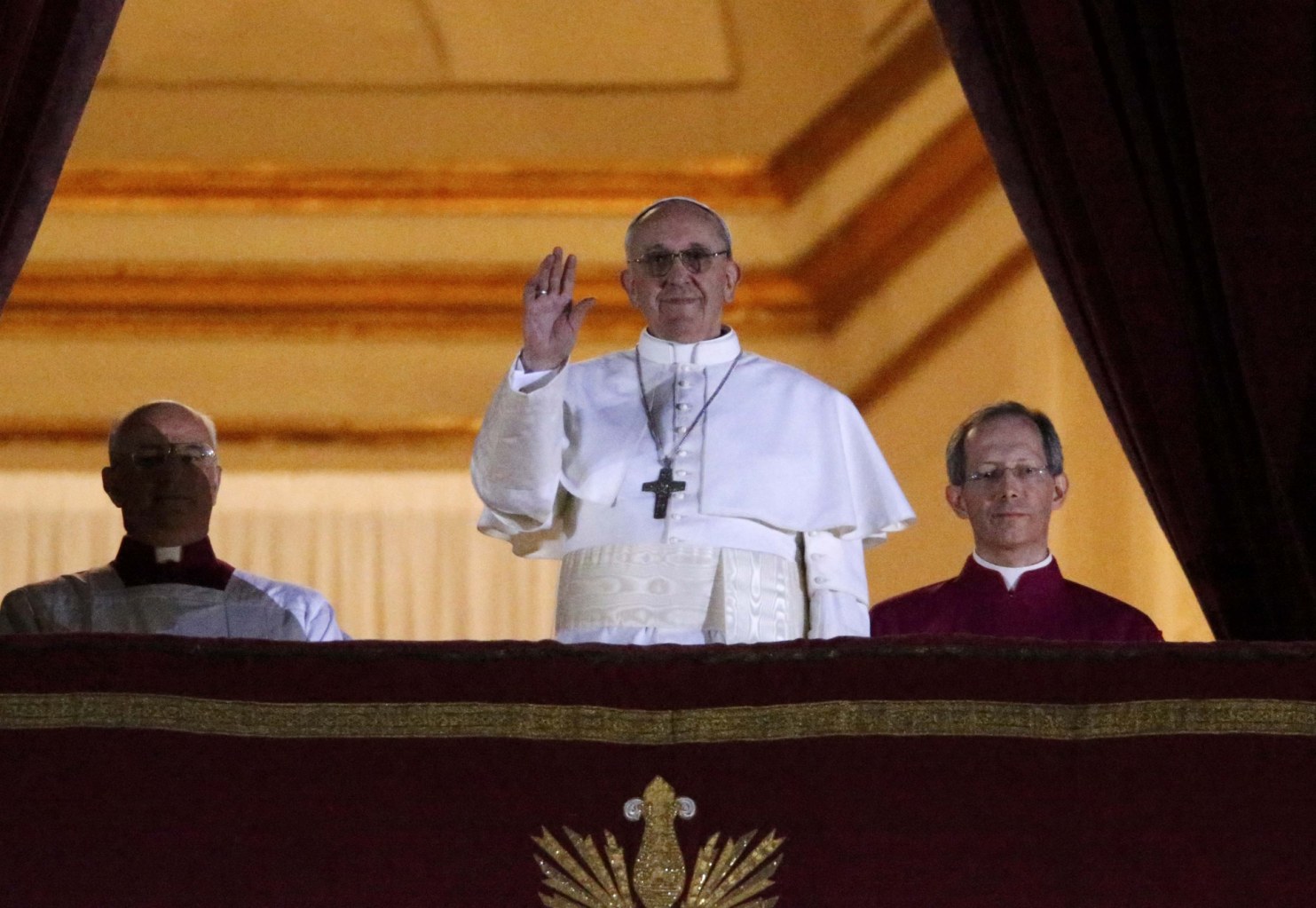
PS: HABEMUS PAPAM! – In what has been the shortest Conclave for 100 years, Cardinal Bergoglio , of Buenos Aires, has been declared Pope. The popeʼs Twitter account has now been changed from “Sede Vacante” to “Pontifex”.

Image

2 Comments

Filed under Uncategorized

The Creator Made Italy, from Designs by Michelangelo

Image

“The Creator Made Italy, from Designs by Michelangelo” MarkTwain

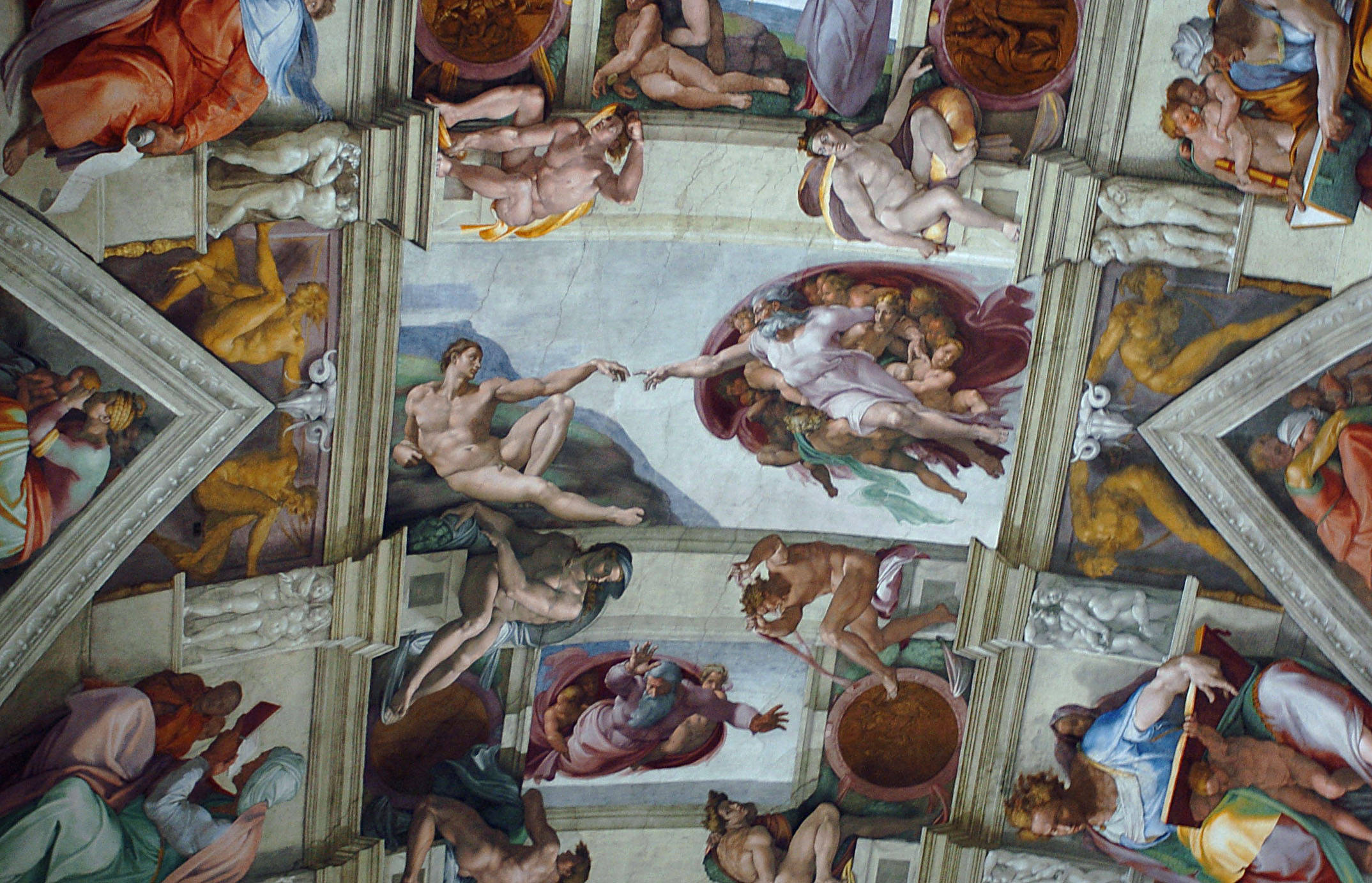
With the Papal conclave starting this week, it’s interesting to note that, while inside the Sistine Chapel, the cardinals are surrounded on all sides by masterpieces meant to provoke them. As George Braque once said: “Art is meant to disturb”!

In his book “When in Rome “, Robert J. Hutchinson noted that “the papal apartments in Castel SantʼAngelo are decorated in frescoes that would have made Hugh Hefner proud…” while the Sistine Chapel “ is covered with naked men and women, all piled on top of one another in what looks for all the world like some sort of biblical orgy “.

Scandalous! Well, that is how some cardinals saw the progress of work in the Sistine Chapel when Michelangeloʼs Last Judgement wall began taking shape.

Image

In fact Biagio di Cesena, papal Master of Ceremonies, visiting the Sistine with Pope Paul III gasped at the naked figures in church and threatened that, if the Pope did not act, he would take it up with the Curia.

Asked to explain his work, Michelangelo pointed out that Armageddon (the Second Coming or end of the world) would find us before God in the form in which He had created us. The Pope said nothing more but, as they left, Biagio was heard still muttering about the “immorality”.

When they returned a few days later the official had a fit because amongst the figures in hell, he had found his portrait. “Holy Father, order him to take me out of there!” – but the Pope would only say that, had he wished to be taken out of Heaven, it could have been arranged, but that Hell was outside his authority. Biagio is still there.

A much-told old story but this is the dramatic spectacle that will confront the cardinals as they take their oath of secrecy at the start of the 2013 conclave. They will also be aware of the spectacular presentation of Old Testament stories above their heads, the only ceiling that “everyone must see before they die

ImageDuring pauses they may also note a macabre detail on the upper part of the famous wall. It is a self-portrait of a long suffering Michelangelo as a skin hanging from the fingers of St Bartholomew who was flayed alive. Pope Paul III himself is gratefully portrayed as St Peter, holding the keys to the Kingdom of Heaven.

These are but a few of the stories held within the walls of the Sistine Chapel, meant to remind the conclaved cardinals of their duties to the outside world.

The conclave starts with a cry of “Extra Omnes!” (everybody out) to outsiders, and as the cardinals start their pensive gazing at their surroundings for the next few days or weeks, we too applaud and murmur “Go Cardinals! The whole world is watching!”

4 Comments

Filed under Uncategorized

The Golden City on a Hill

Image

I only met Marc Chagall once. It was on Oct 9th, 1978 having just emerged from the inner rooms of the Chagall National Museum ( Cimiez, Nice) in somewhat of a daze from the mesmerizing combinations of his colors, dreamlike compositions and floating figures that inhabit his characteristic pieces.

I saw a short man, with fine wispy hair, a long raincoat and a quizzical smile. The face was familiar to me from photographs, and he was exchanging a few words with the attendants by the entrance. I guessed immediately it was Monsieur Chagall.

A French president described Chagall as the painter of Joy in Life –  those large canvases on the museum walls, inevitably leading to the smaller rooms with the brilliantly colored themes from the Song of Solomon or the Song of Songs, was in itself a joyful journey into the deep Mediterranean sauce of our European culture. Although Chagall himself had cautioned that his painting was not really European, but rather partly oriental.

I was particularly fascinated with the scenes of paradise in the earlier pictures, but it was the lovers floating or flying over Jerusalem that caught my attention as the image of the “shining city on a hill” was that of St Paul de Vence.

I introduced myself to Monsieur Chagall, said “Bonjour”,  “Merci pour votre vision!”, then  asked him about the portrayal of St Paul de Vence. He replied kindly, explaining that, although he had a studio for some years in nearby Vence, it was St Paul that was really special. It was there, in his home known as “La Colline”, that he felt most “en place”.

“We all carry a vision of Jerusalem in our hearts”, he added, “remember Psalm 137” (which contains the famous verse “if I forget thee O Jerusalem, let my right hand lose its cunning”). He took a small illustrated book from the kiosk, signed it, gave it to me with a smile and was gone.

When wandering through the crowded streets of St Paul, you eventually emerge at the far end of the Rue Grande, where you can find a narrow gateway leading to the old village cemetery There on the right is a simple stone slab over the remains of the spiritual dreamer and sublime colourist, where I like to pause and place a pebble.

ImagePS : Currently an exhibit entitled “Chagall between War and Peace” is showing at the Musée du Luxembourg in Paris, until July 21

Leave a comment

Filed under Uncategorized

A Home for the Wanderer

Image

Among the artists associated with Saint Paul de Vence, Marc Chagall is the most fondly remembered. He lived in many places throughout his life after having been forced to leave his native Russia due to “differences” with the post-revolutionary soviet bureaucrats.

He made his home in Paris and later left for New York  during World War II. Once there, comfortable in his house in High Falls, he decided that “America is more dynamic, but also more primitive. France is a picture already painted”. At the same time, his cosmopolitan side made him exclaim “I’m a foreigner here, and at the same time, I’m at home because I’m a Jew”.

Returning to France, he decided to live in Vence itself before moving and settling permanently at his last home, “La Colline”, in St Paul de Vence. One of his neighbors in Vence, the existentialist writer Witold Gombrowicz, claimed that “any artist that respects himself, ought to be in every sense of the term an émigré”. Marc Chagall certainly fulfilled that description.

Leave a comment

Filed under Uncategorized

Heart of the Riviera. St Paul de Vence and the artists

Image

Ever since Lord Brougham was turned away at the France/Italy border-crossing in 1834 (due to an unfortunate case of “foot & mouth disease”) and by lucky chance  discovered the charm of the bay of Cannes with its unique microclimate – the French Riviera, or “the Côte”, has been a legendary destination.

Not only the azure blue color of the sea but, as many artist-residents explained, “it’s the light” which inspired the brilliantly coloured paintings by Matisse (in Nice), Renoir (in Cagnes), Picasso (in Vallauris), and particularly Chagall at St Paul de Vence, the old town which in itself may be the most interesting objective for any traveller, both for its physical presence and its various memories and meanings.

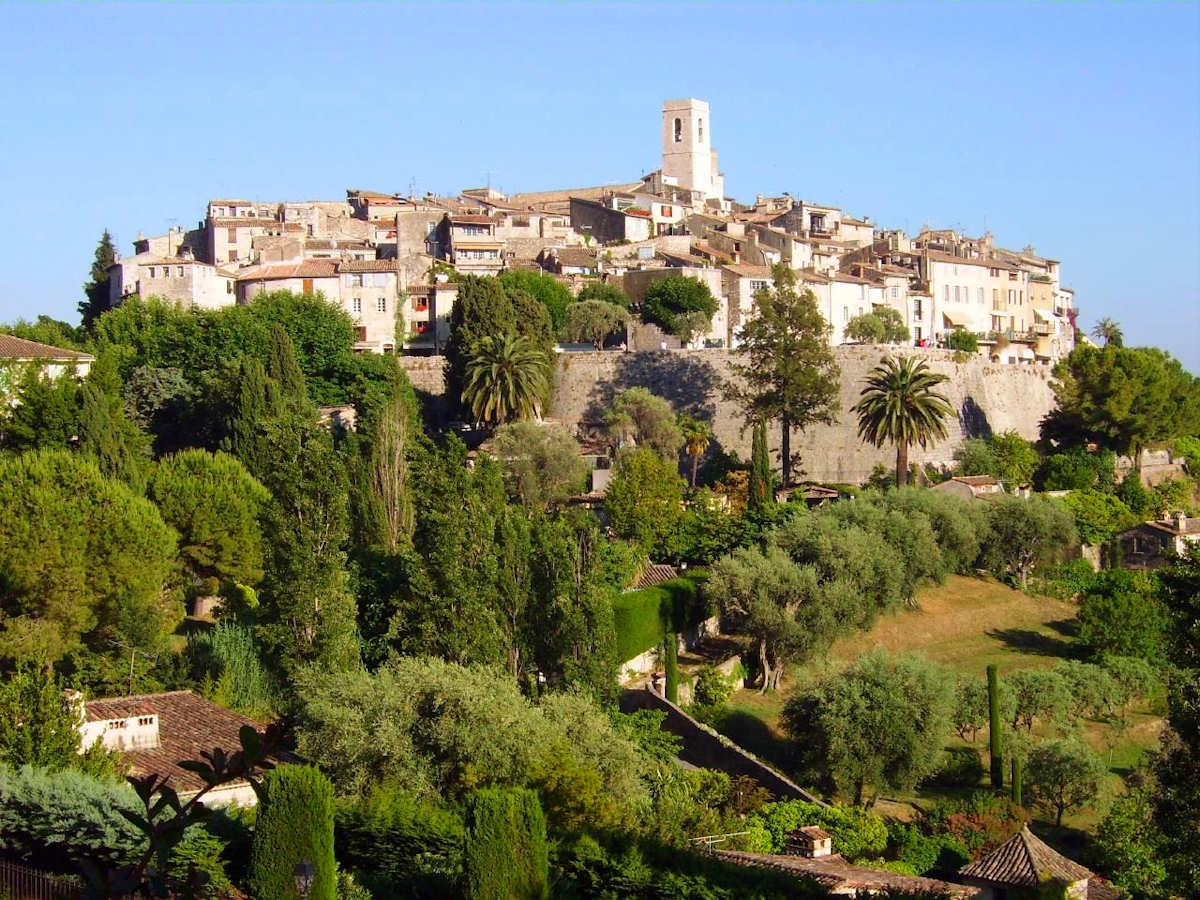
It is worth leaving the cities and dramatic coastline of the Riviera to drive into the valley of St Paul de Vence. This once frontier-town, situated between France and the former state of Savoy, sits comfortably around the upper contours of the hill slope, rising to a high point at the ancient chapel tower and still surrounded by the ramparts of the defensive wall.For many moments of the day, it looks from a distance like a floating mirage, a ghost from the past. In fact, although lovingly preserved and only accessible on foot, the town could not be more alive and is much used both by permanent residents and transient visitors.

Before reaching the approach to the main gateway, the huge letter “M” of welded steel beams by Alexander Calder points away from the town towards the celebrated Maeght Foundation, one of the most valuable contemporary collections of European 20th Century art.

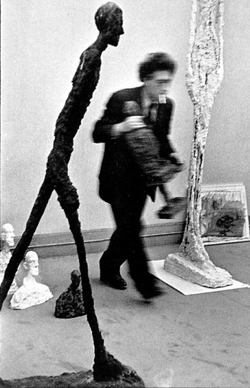
albertoFounded by Aimé Maeght in 1964, it contains, amongst many others, works by Chagall and a whole courtyard of 60 Giacometti bronze sculptures, including two of his famed “Walking Men”.Asked to describe Giacometti, Chagall once explained “he feels profound forces of nature.!”In 2010, a Giacometti “Walking Man” ,“l’homme qui marche”, was sold by Sotheby’s in London for a then record breaking £62M – cheered on by the late Aimé’s granddaughter Yoyo  who later said that her feeling at the time was “Bravo Papi!…. and after that, of course, I was furious because I thought of the insurance!” (Referring to how much she’d have to insure the two remaining ones in the courtyard, never mind the rest of the sculptures there!).

If instead of taking the turn towards Maeght, one continues towards the historic town, the outstanding landmarks on its approach are the Colombe d’Or and the Café de la Place – each an unforgettable destination in itself.

The Colombe d’Or, a comfortable but rustic hotel/restaurant, came into its own when the Côte became the center of bohemian artistic France.Matisse, Chagall and Picasso were regulars at the inn and the Roux family owners built up a now fabled personal collection  by accepting paintings and sculptures, from the then unknown artists, in lieu of payment for hospitality.  The collection is still displayed in the dining room walls.

There, it is rumored, Chagall exchanged words with Picasso. The latter had suggested “when Matisse dies, Chagall will be the only painter left who understands what color really is” – to which Chagall countered saying “what a genius that Picasso, it is a pity he doesn’t paint”.

Amongst the many famous guests were Chaplin, Marlene Dietrich, Edith Piaf, Greta Garbo, Jean Paul Sartres and Simone de Beauvoir, Sophia Loren, Catherine Deneuve, Peter Ustinov, and many more.The actor Yves Montand and later Bill Wyman of the Rolling Stones liked the unique ambience so much that they even had their wedding receptions there.

458_001

Looking at the town from the valley below, is the 17th century farmhouse of Bill Wyman, whilst Roger Moore, after his James Bond appearance at the Cannes Film Festival, purchased a home nearby and was a regular at the Colombe d’Or with his actor friend and restaurateur Michael Caine, until forced to relocate to Monte Carlo when his 3rd marriage broke down.

On many occasions the Café de la Place across the road from the Colombe d’Or saw a cheerful crowd on the terrace cheering Yves Montand on to victory, in the boules/pétanques game played on the Grande Place in front of it – and roaring with laughter when the losers had to kiss a ceramic lady’s bottom, known as “Fanny”, hidden behind red velvet curtains near the bar.

It is this atmosphere that attracts visitors to St Paul from around the world, making it possibly the single most visited town along the whole French Riviera with something to offer to everyone in its antique shows, art galleries, original souvenirs,panoramic views and a living record of the past.

1 Comment

Filed under Uncategorized