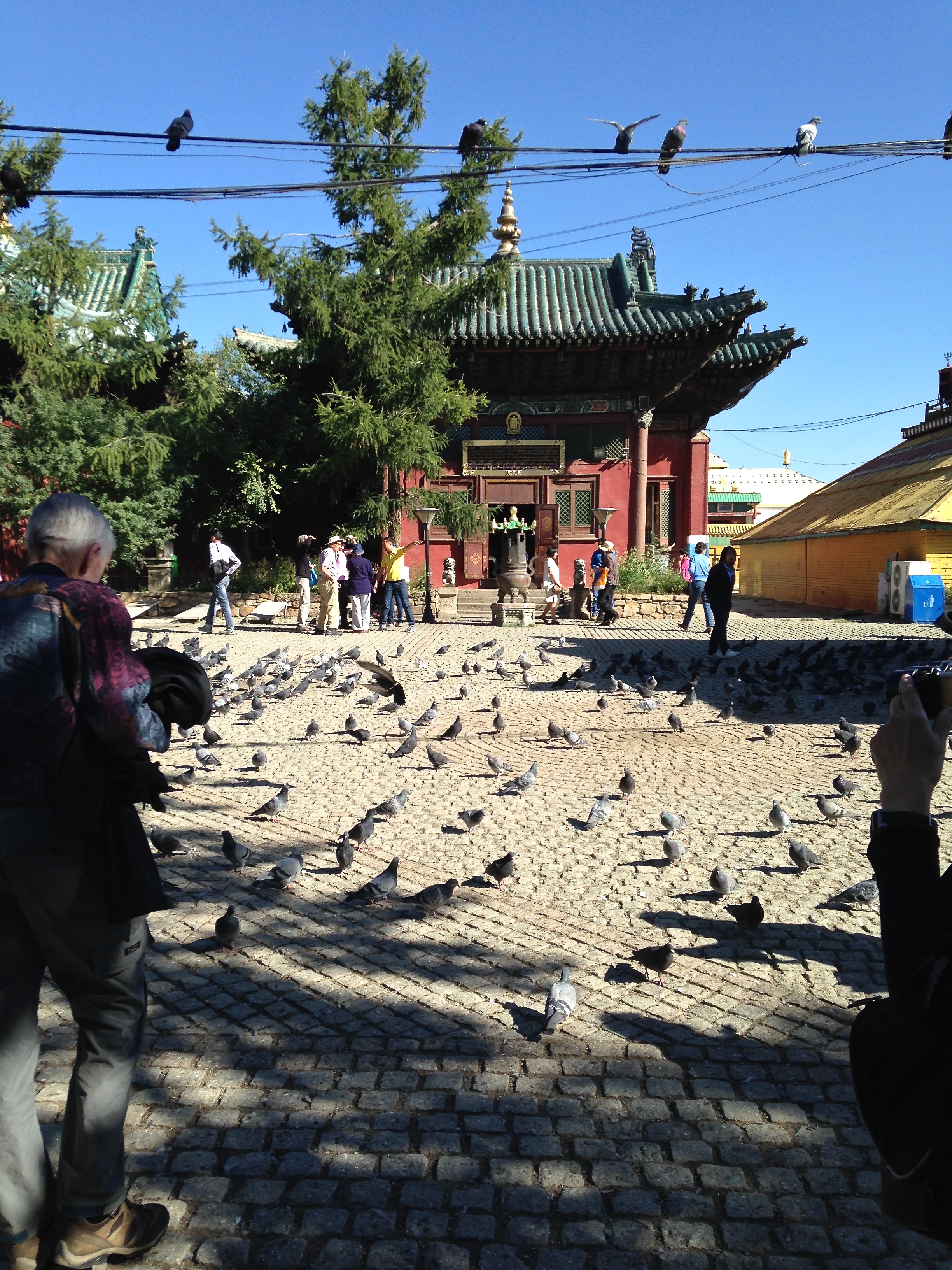
With Ulaan Baataar and Mongolia a pleasant memory behind us, the Golden Eagle continued towards Khilok, Chita, Mogocha, out of the taiga and eventually overnight at Khabarovsk.This gives us time to reflect on all that we have seen, discuss the lectures by Dan Healey and comment on the news headlines before reaching the Amur/Ussuri river junction towards the end of the line at Vladivostok.
The subject of Siberian exile and the Gulag inevitably comes up, in lectures and in conversation. Both Joseph Stalin and Feliks Dzierzhinsky (founder of the secret police) escaped from Siberia twice. On that overnight at Khabarovsk, we hear that a large statue of Stalin is still standing there and that there is nostalgia for the Soviet Union, which had seemed to offer stability after the more recent economic chaos from a rushed privatisation. Engineering delays on the tracks allowed us to study the subject further, with an additional lecture by Prof.Dan on the Great Patriotic War (WWII) and national memory, the central event in Soviet history.
Fear of chaos in this huge land has always been central to Russia’s history.The rise of Vladimir Putin is attributed to his skill in balancing the various competing clans. Ultimately his concern has been more with internal matters than external economics. Much is made of his choosing Siberia to celebrate his 2014 (62nd) birthday, far from the Kremlin and its factions, though local observers are heard to remark ” Why does Putin need friends when 85% of Russians support him ?”. American strategist Robert Kaplan has pointed out that if Putin were toppled, it would be quite possible that a more brutal dictator would emerge to forestall any possible chaos. He sees the breakup of Russia more likely than any emergence of Western-style democracy. It is interesting to realise that, if that were to occur, Siberia would still be the largest country on earth.
Dissenting opinions on the past are still expressed. Recently, award-winning Russian film director Andrei Konchalkovsky, celebrated for his epic film “Siberiade” (and whose father wrote the words to the stirring 1943 national anthem), explains during an interview at the Venice Film Festival, that “Marxism is a wonderful thought if you are sitting with a pipe by the fire, but Marxist ideals in Cambodia give you ten million chopped heads”. Statistics from 2013 estimate that the median household wealth in Russia is US$ 871 while, surprisingly, it reaches US$ 1040 in India. Someone appropriately quotes 19th century historian Vasily Kluchevsky who said “The state grew fat while the people grew thin”.
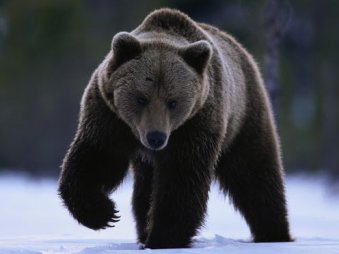
We already are in Eastern Siberia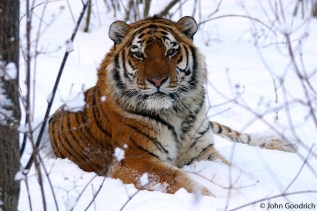 p, land of the endangered Amur Tiger. There are less than 30 left in China and 400 in Siberia, some of which prey on bears. There is also an Amur leopard, though only about 45 adults remain in the wild. Earlier in 2014, Vladimir Putin released three tagged Amur tigers into the wild in this region. One, a male called Kuzya, made headlines by quickly choosing to cross the river into China, where local officials welcomed the event, promising that “if necessary, we can release cattle into the region to feed it” .Siberia remains in the news…
A final on-board Farewell Dinner, then it is time to prepare for the last stop on the world’s longest railway line, the once closed city of Vladivostok. The journey has been a tremendous survey of Siberia and Russia itself, an experience to savour for long, maybe even contemplate a return journey for a magical winter view. Certainly the words of poet John Keats ring true:
Much have I travelled in the realms of gold
And many goodly states and kingdoms seen…
In London for the January 2014 Stanford Travel Writers Festival, I spoke with writer and traveller Nick Hunt about Siberia. He had recently walked from London to Istanbul, describing the experience in his latest book Walking In The Woods. He told me about French author Sylvain Tesson who had gone to spend six months isolated in a log cabin at Lake Baikal, equipped mostly with vodka, pasta and books. He outlined his thoughts in a memoir, “Consolations of the Forest”. Ah! Thoreau and his famous retreat at Walden, but on Stolichnaya !! Unbeatable !! 
Tesson’s book is at the top of my reading list for 2015 !
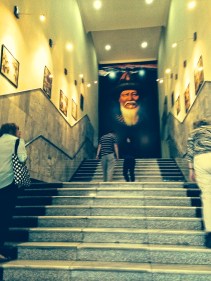 Stories of the great treasure, said to be buried with him, have always circulated among Mongol tribes.The site of his former palace is located about 150 miles from today’s capital, Ulaan Bataar. Despite rumours and many searches (even, most recently, by satellite), nothing has ever been found. In the city itself, the main city square is dominated by the seated statue of Chingghis (Genghis) Khan on the approach to the National Museum.
 to sheep”). Traditionally a nomadic people, they were accustomed to live in relative isolation from each other. Once guided by Shamanism then by Buddhism, they were ruled from the legendary capital of Karakorum, the center of power moved later by Kublai Khan to Shengdu, an event imagined by poet Samuel Taylor Coleridge in his memorable verse
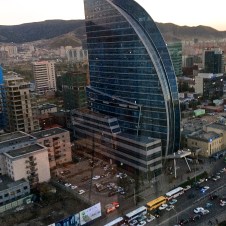 the city still has some of the lowest crime rates in Asia.
 here. A popular restaurant, DGH, is subtitled “Dreams Get Happiness” while another sign reads “DESTROY, Hair and Beauty Salon”?! The largest commercial enterprise is the STATE DEPARTMENT STORE, “All Needs are Fulfilled,100% cash back guarantee”. It is full of Western and UK brands that, according to our British fellow-travellers, are offered at 2/3 the price of Marks and Spencer.
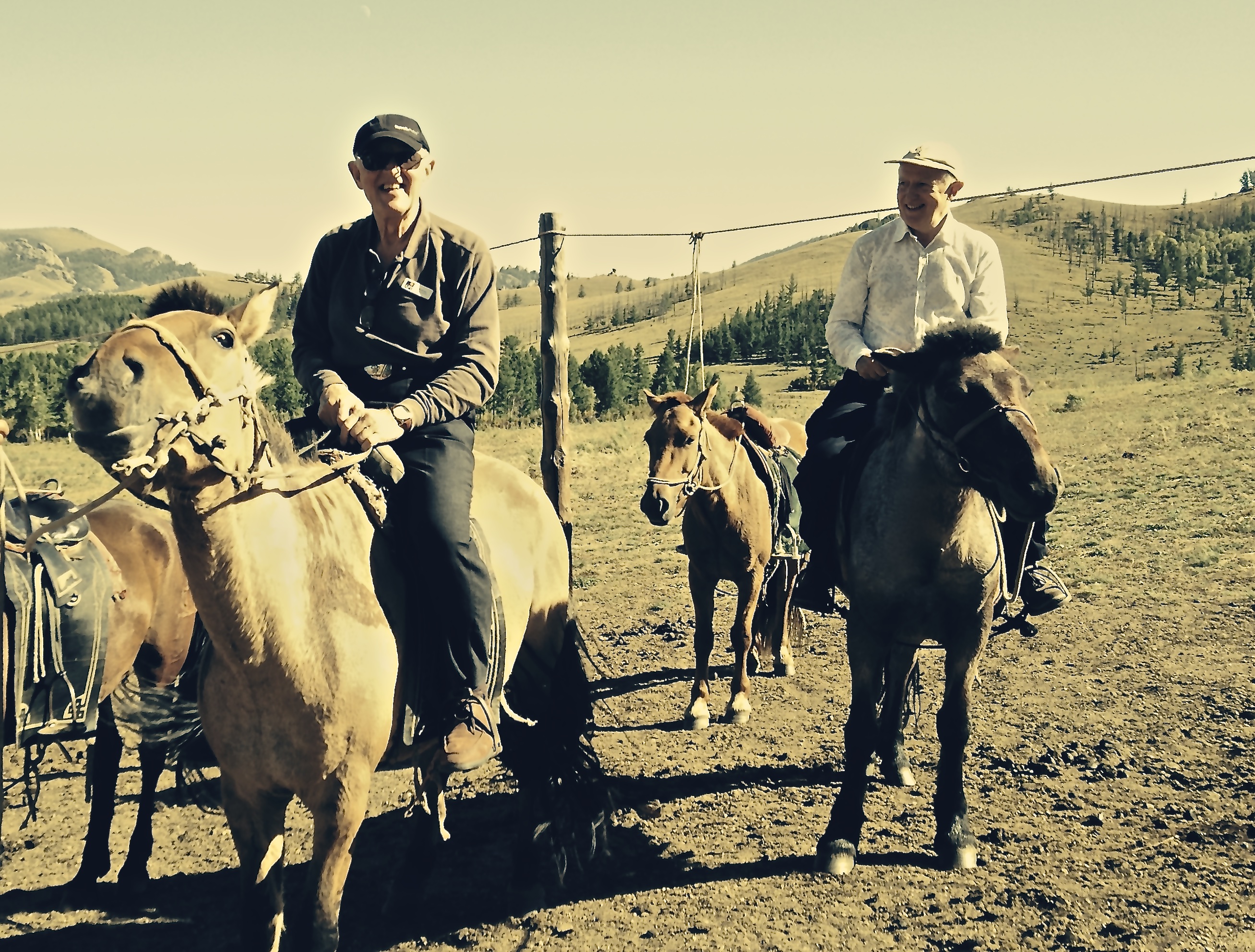
 While two of our intrepid travellers, Bob and Geraldine, head out of the city to see the enormous (40 meters/about 130 ft tall) Genghis Khan statue by the Tuul river, the rest of us leave for the dramatic rocky Terelj National Park. The tour is led by our local guide Buyana, whose name, we find out, means “heavenly light”. It is a chance to catch a glimpse of wild Mongolia.

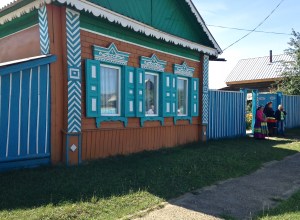 to Russian tradition and a fascinating visit to an Old Believer community, exiled to Siberia centuries ago for refusing to accept reforms aligning the liturgy with that of the Greek Church. During the visit we have lunch, enjoy village songs and jokes, admire the colorful painted houses and their gardens. Soulful Russian poet Yesenin, once lover and husband of Isadora Duncan, came from an Old Believer peasant family. We hear about even more traditional Old Believer communities such as those in Estonia that still follow ancient prohibitions such as the one where men who die without a beard have to be buried in an unmarked grave or another about women who, unable to enter a church bareheaded, must have their scarves pinned under their chin for tying a knot is symbolic of the suicide of Judas by hanging. Otherwise the traditional icons are similar, the “onion domes” of churches still represent the flame of a candle, while the lower bar on the crucifix, at an angle to the cross, represents pointers signifying up to heaven, down to hell, a reminder of the choices made by the two thieves crucified on either side of Christ on Golgotha. Another window on the Russian soul.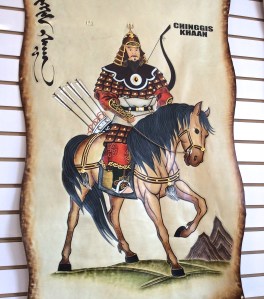
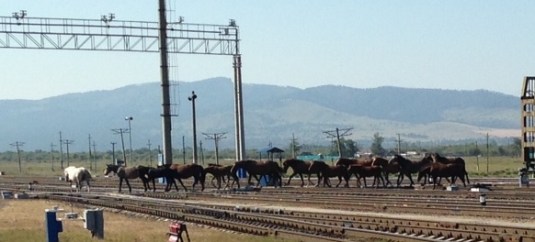
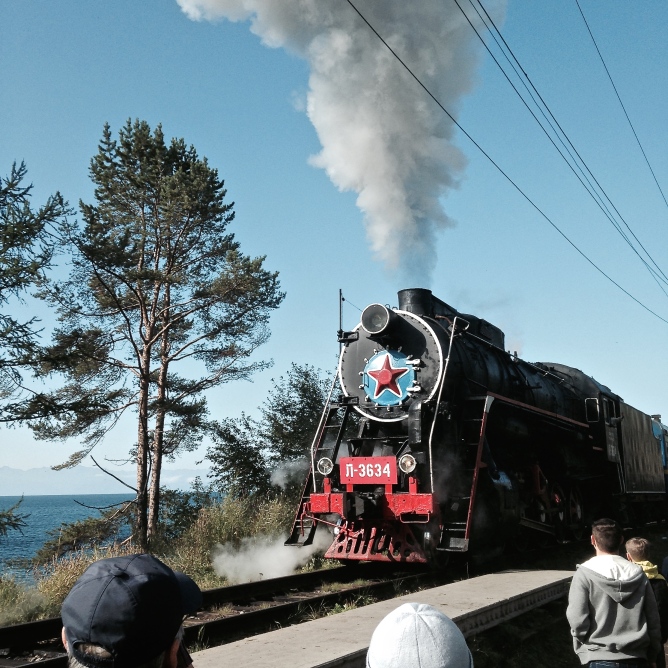
 That evening there were cocktails and a special Caviar Dinner. Piano music in the lounge bar brought a discussion on how Moscow composer Boris Tchaikovsky (no relation to Peter Ilyich) was moved to write his symphonic poem on “The Wind of Siberia” (1984), considered a “pictorial masterpiece” by critics. Irkutsk novelist Valentin Rasputin was also mentioned as a controversial environmentalist (maybe stimulated by his own home village, Atalanka, being flooded as part of a major dam project ). He is seen as trying to protect and preserve northeastern Siberia from what Moscow authorities consider as ripe for exploitation or development. We note the stop at Polovina to come. It means “half-way” and is located as a marker station 4644 kms. from Moscow. There are towns with warning names such as Zima (meaning “winter”) before reaching much visited Irkutsk and Baikal, the world’s deepest freshwater lake.
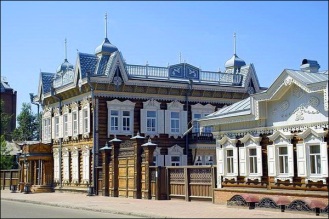 , inconvenient critics such as Romantic writers Lermontov (“A Hero of our Time”) and Pushkin had been sent to the Caucasus to cool off, but this was a more serious matter. The Decembrists, as they became known, came from the Russian elite. Their main leaders were hanged, but large numbers of exiles from aristocratic families were dispersed over Eastern Siberia. They gradually made Irkutsk their principal centre, at the same time transforming cultural awareness in the whole region. A particularly poignant aspect of their exile was the heroic determination of their wives and fiancées who abandoned great wealth, comfort and even their children, to support their rebellious, liberal spouses and create an island of culture in the wilderness ,an aspect which still influences the city today. It is this which is brought out in our Golden Eagle excursions when we see the paintings, portraits and landscapes at the Irkutsk Art Gallery, before visiting some of the carefully preserved wooden houses, long gone in most other cities.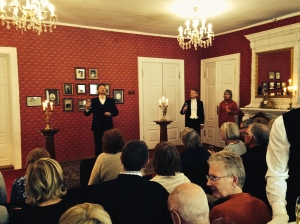
 triumphant rendering of Tchaikovsky’s Violin Concerto (it is absolutely worth seeing, at least
 Lonely Giraffe